Why Staying on the Ghats Makes Your Varanasi Experience Truly Special
24-09-2026
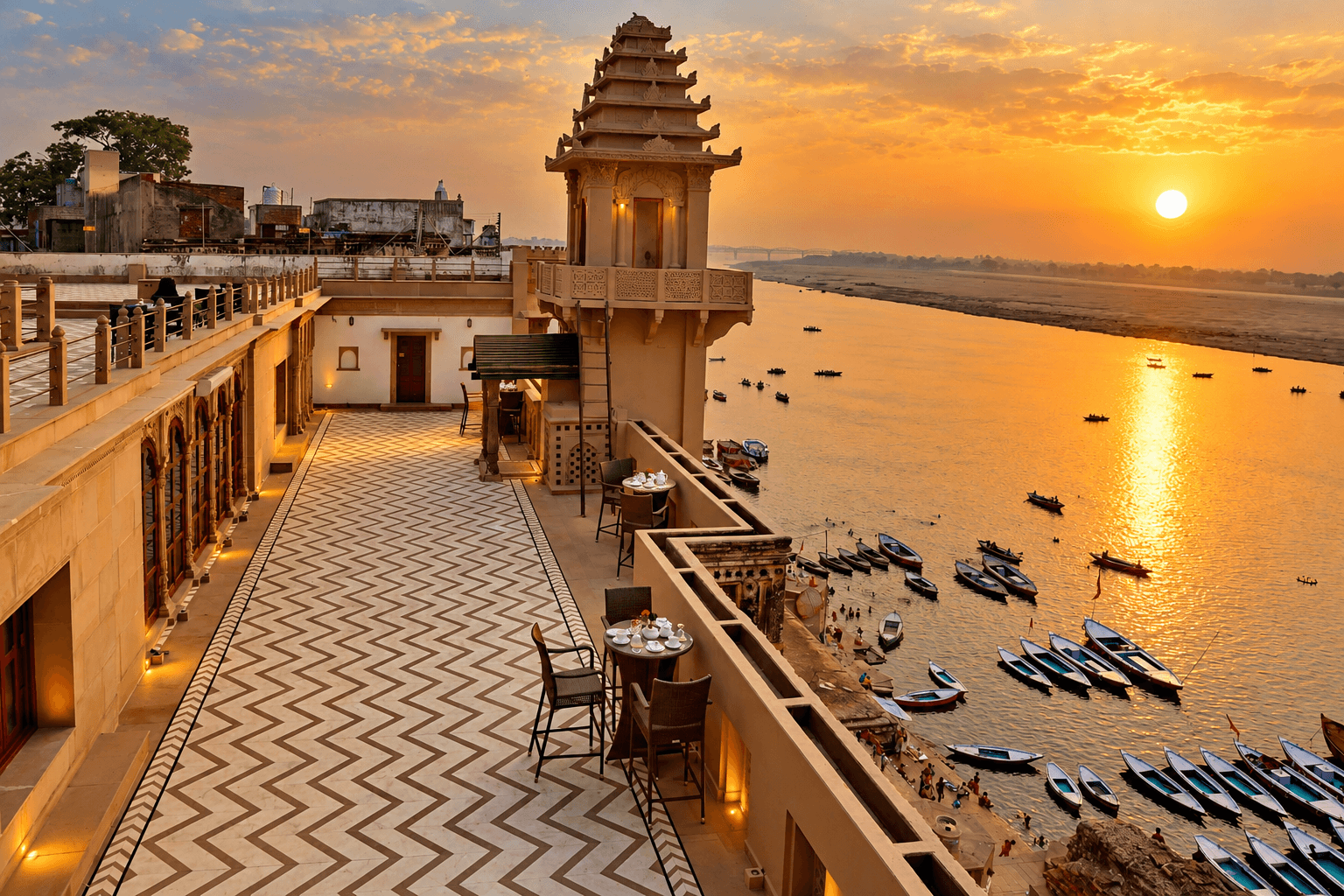
Table of Contents
- 1. The Difference Between Visiting Varanasi and Being In It
- 2. What Actually Happens on the Ghats, Hour by Hour
- 3. Why a Hotel on the Ghats Changes the Ganga Aarti
- 4. The Amrit Vela: The Hour That Only Works If You're Already There
- 5. What a Heritage Hotel in Varanasi Gives You That a City Hotel Can't
- 6. BrijRama Palace
- 7. FAQs
The Difference Between Visiting Varanasi and Being In It
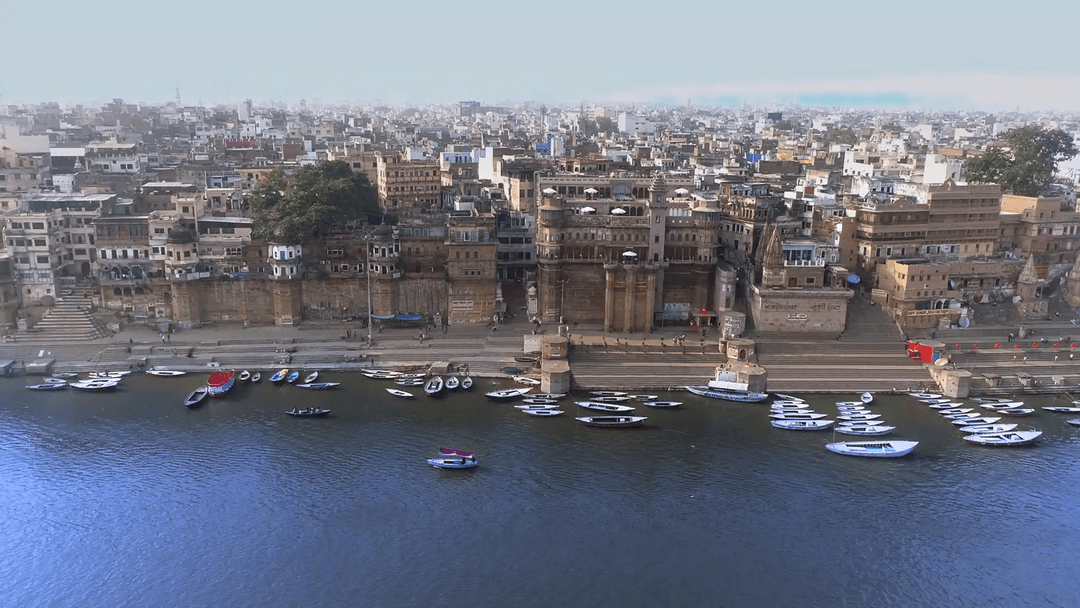
Book a hotel ten minutes from the river and you'll still see Varanasi. You'll see the aarti, walk a ghat or two, maybe catch sunrise from a boat someone arranged for you. What you won't get is the part of the city that doesn't run on a schedule the priest setting up his position on the steps before dawn, the brass bells from three different temples overlapping at once, the boatmen calling out fares to nobody in particular because the morning crowd hasn't arrived yet. That layer of Varanasi exists whether or not a tourist is watching it. A hotel on the ghats in Varanasi puts you inside that layer instead of outside it, looking in through a car window on the way to somewhere else.
This isn't a small distinction and it isn't sentimental. It changes what time you wake up, how far you walk, and whether the most important two hours of your stay happen to you or happen near you.
What Actually Happens on the Ghats, Hour by Hour
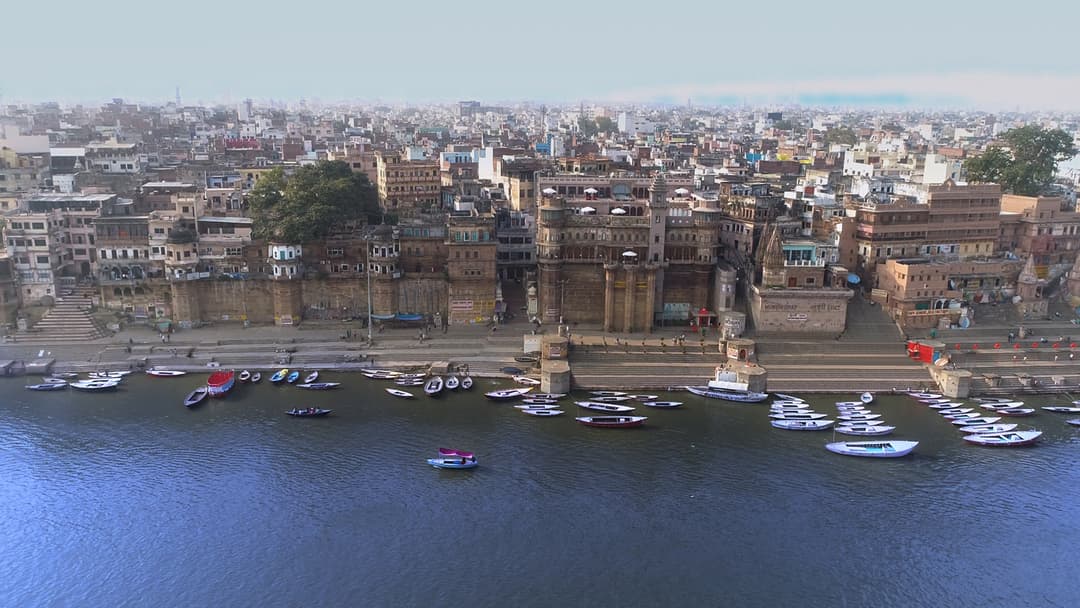
Before sunrise, the ghats belong to ritual. Bathers enter the Ganga at ages ranging from eight to eighty, for reasons ranging from daily habit to a pilgrimage planned for decades. Sadhus sit in the same spot they've occupied for years. By mid-morning the character shifts vendors, students cutting through on their way to class, dogs sleeping in patches of shade that move with the sun. Evening brings the aarti and the crowds that come with it. Late night empties the steps out almost entirely, leaving just the river sound and the occasional boat returning late.
None of this is staged for visitors. It's the actual rhythm of a city that has run this way, more or less, for over three thousand years. Staying steps from Dashashwamedh Ghat or Darbhanga Ghat means you catch pieces of all four of these hours without planning a single one of them. Staying in a hotel near Dashashwamedh Ghat but not on it means catching the version your itinerary allows for, which is usually just the evening.
Why a Hotel on the Ghats Changes the Ganga Aarti
The Dashashwamedh Ghat aarti at dusk is genuinely one of the great religious spectacles in India — seven priests, synchronized fire lamps, drums, crowds packed shoulder to shoulder on both the steps and the water. Most visitors experience it from a rented boat pushed off from a jetty they were driven to, after fighting traffic and a parking search that eats into the window before the ceremony starts.
From a hotel on the ghats, the boat leaves from the steps below your room. No transfer, no jetty crowd, no guessing whether you'll make it in time for the lamps to be lit. You're on the water watching the flames reflect off the Ganga while other guests are still stuck in a rickshaw three lanes back. It's the same ceremony. It is not the same evening.
The Amrit Vela: The Hour That Only Works If You're Already There
Amrit Vela is the pre-dawn window, roughly 4 to 6 am, considered the most spiritually charged time to be at the river. The light is still grey, the ghats are close to empty, and the bathing ritual carries a weight it simply doesn't have at 9 am with tour groups filing past. Every Varanasi guide will tell you to experience it. Almost no visitor actually manages to, because it requires a 3:30 am wake-up, a car, and a driver who's also awake at that hour.
A hotel on the ghats removes the obstacle entirely. You walk downstairs and you're there. This single hour — arguably the most authentic thing Varanasi offers — is functionally unavailable to anyone not already staying on the river, no matter how good their itinerary looks on paper.
What a Heritage Hotel in Varanasi Gives You That a City Hotel Can't
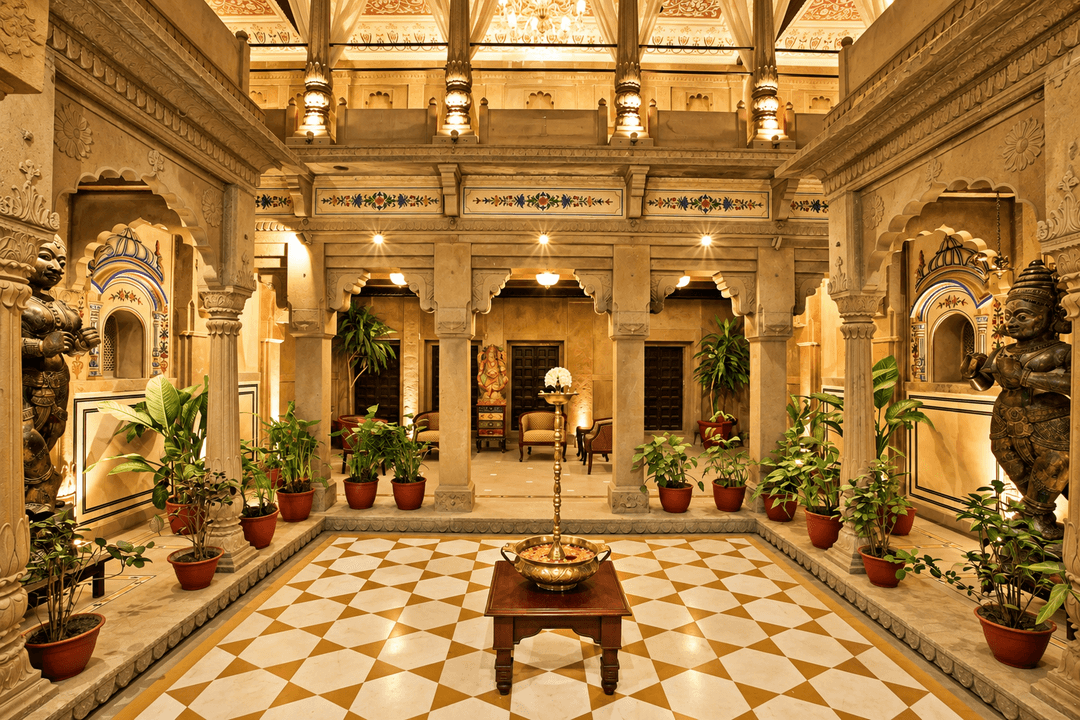
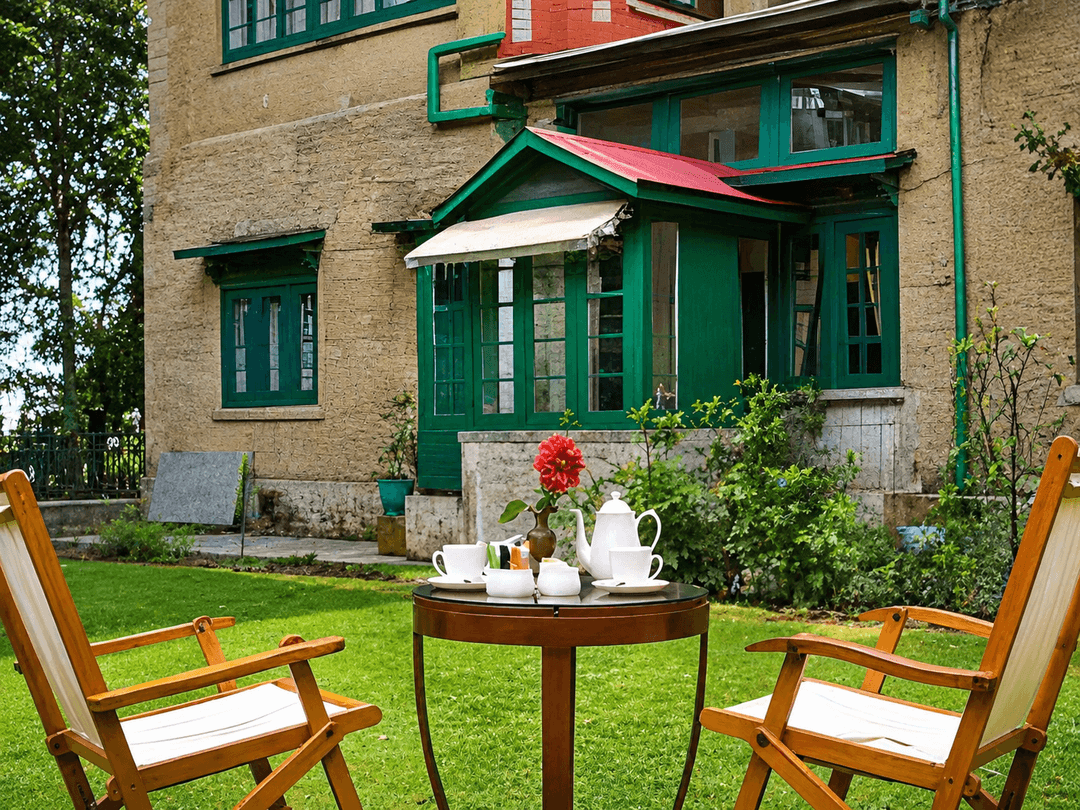
There's also the building itself. The palaces and havelis lining the ghats weren't built by developers chasing a river view — they were built by royal families and merchant houses over centuries, positioned exactly where the builders wanted them, on land they could have put anywhere along the bank. A heritage hotel in Varanasi occupying one of these structures inherits that positioning: windows angled for the morning light off the water, terraces built specifically to catch the ghat below, courtyards designed around functions a modern hotel's floor plan was never asked to solve.
A luxury hotel on the Ganges built in the last twenty years can match the room quality. It can't manufacture three hundred years of a building knowing exactly where it's supposed to sit.
BrijRama Palace
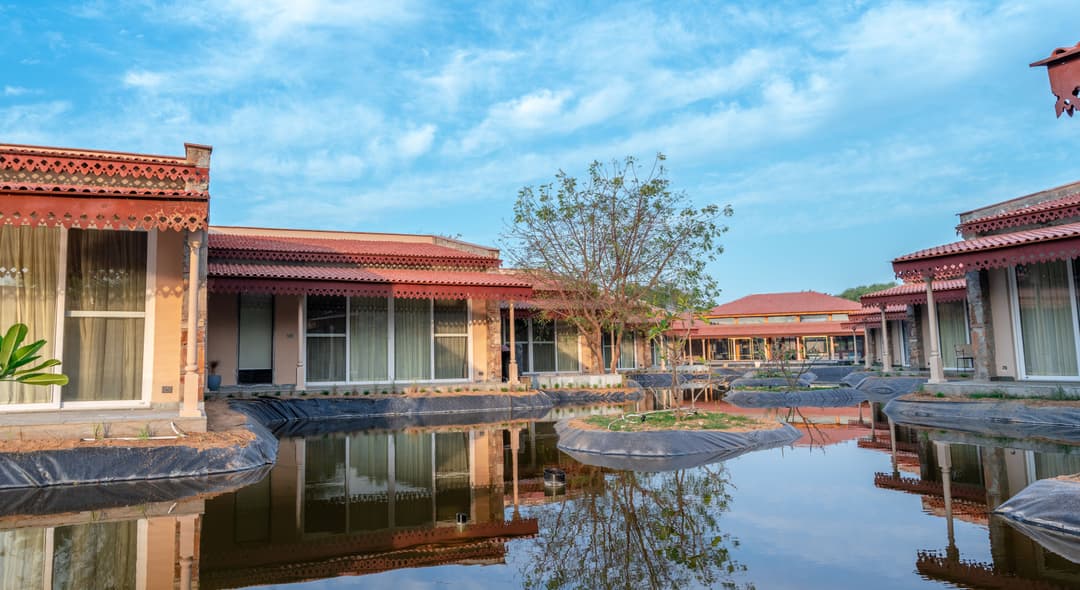
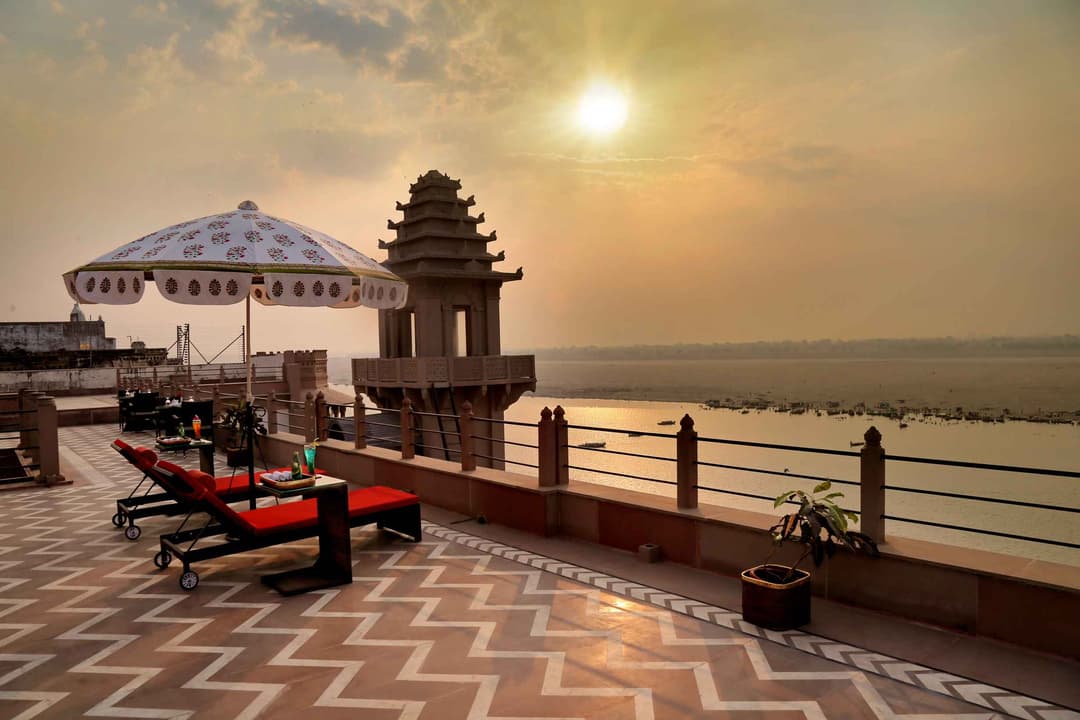
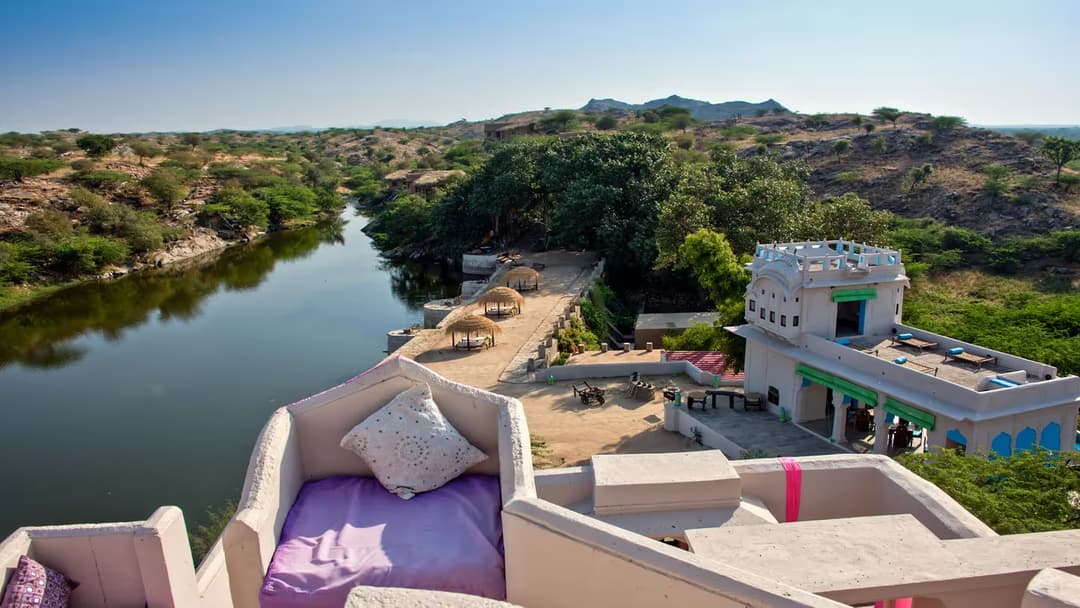
BrijRama Palace occupies a 19th-century palace directly on Darbhanga Ghat, one of the most storied stretches of the Varanasi riverfront. Every room and terrace faces the Ganga, and the boat to the evening aarti leaves from the palace's own ghat steps — no transfer, no jetty, no timing risk. As a heritage hotel in Varanasi built by the Darbhanga royal family, the palace carries a history on the river that a newer property simply cannot replicate, and as a hotel on the ghats in Varanasi it puts the Amrit Vela, the aarti, and the everyday rhythm of the riverfront within walking distance of your room rather than at the end of a drive. It's the rare hotel near Dashashwamedh Ghat where the address isn't a selling point tacked onto the brochure — it's the entire premise of the stay.
FAQs
1. What does it actually mean to stay at a "hotel on the ghats" in Varanasi?
It means the property sits directly on the riverfront steps rather than a few streets or a drive away. You can walk to the water, catch a boat for the aarti from your own hotel's steps, and reach the ghats at 4 am without arranging transport.
2. Is a hotel near Dashashwamedh Ghat the same as a hotel on the ghats?
Not necessarily. "Near" can mean a five-minute walk or a fifteen-minute drive depending on the property. A true ghat-front hotel like BrijRama Palace sits directly on the steps of Darbhanga Ghat, a short stretch from Dashashwamedh, with direct river access rather than proximity through a road.
3. Why does staying on the ghats matter for the Amrit Vela?
Because the window is short — roughly 4 to 6 am — and requires being at the river while it's still dark and mostly empty. A transfer from a city hotel eats into that window before you've even arrived. From a ghat-front stay, you're already there.
4. What makes a heritage hotel in Varanasi different from a modern luxury hotel on the Ganges?
The building's history and position. Heritage properties on the ghats were constructed by royal or merchant families over centuries, with rooms and terraces oriented for the river in ways a newer hotel's floor plan doesn't replicate, regardless of how high the finish level is.
5. How many nights should you spend at a hotel on the ghats in Varanasi?
Three nights is the minimum to properly use the Amrit Vela, the ghat walk, the Kashi Vishwanath Temple, and the evening aarti without rushing. Staying directly on the ghats makes each of these easier to fit in, since none of them require a scheduled transfer to reach.